Heart HealthWarnings to watch for during exercise

Exercise is beneficial for everyone, even those who have heart disease or have had a heart attack. Regular exercise can strengthen your heart and promote quicker recovery.
Safe Exercise for Heart Disease
However, there are warning signs to watch for.
Stop exercise if you become short of breath or overly fatigued. Granted, exercise will cause you to breathe harder and you should feel like you have exerted yourself after a solid workout. Discuss what is acceptable for you with your doctor.
If you deal with shortness of breath regularly, even when not exercising, contact your doctor. You may need to adjust your diet, fluid intake, or medications.
If you develop heart palpitations or an irregular heartbeat, stop exercising, rest for 15 minutes and then take your pulse. If you heart rate remains greater than 120 beats per minutes, contact your doctor.
Don’t ignore pain. Ignoring pain can lead to injury.
When to stop exercising
Continue reading
Lower CholesterolWhat is a heart attack?
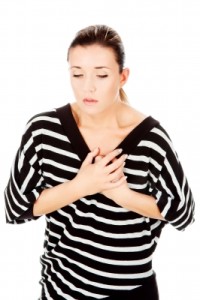
A sudden and sometimes fatal occurrence of coronary thrombosis, typically resulting in the death of part of a heart muscle. ~ Oxford dictionary
The heart muscle requires oxygen to survive. When oxygenated blood flow to the heart muscle is cut off or severely reduced a heart attack occurs. Blood flow can be cut off or severely reduced by the build-up of arterial plaque. This build up eventually causes arteries to narrow and potentially close completely. This is a slow process known as atherosclerosis.
As plaque builds up it can eventually rupture or break open inside the artery, causing a blood clot to form. If the blood clot becomes large enough, it can reduce or completely block the flow of oxygen rich blood to the heart muscle.
Ischemia is when the heart becomes deprived of needed oxygen and nutrients. If blood flow to the heart is not quickly restored, ischemia will damage or cause the death of part of the heart muscle. This is a heart attack and the healthy heart muscle tissue becomes replaced with scar tissue.
Continue reading
Heart HealthHome Blood Pressure Monitor: A Review
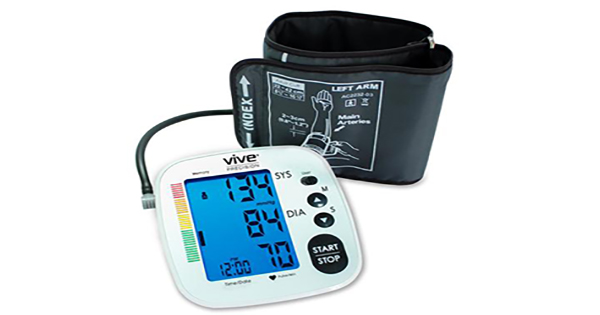 Monitoring blood pressure at home is one step you can take to supplement clinic monitoring for a more complete representation of your typical blood pressure throughout the day.
There are a wide variety of blood pressure monitors available. The American Heart Association, American Society of Hypertension, and Preventive Cardiovascular Nurses Association all recommend upper arm devices for greater accuracy. Avoid wrist and finger monitors.
When purchasing a home blood pressure monitor, it’s important you consult with your doctor or medical supply company to ensure you select an appropriate cuff size.
Vive Precision Blood Pressure Monitor
ViveHealth.com gifted me with a Vive Precision Blood Pressure Monitor along with compensation to review this device. That being said, all opinions in this review are my own.
The Vive blood pressure monitor comes with a large, easy to read display and is battery or AC power compatible. The product I received came packaged with the four AAA batteries needed. It did NOT come with the AC adapter. Looks like it requires a standard DC V6 adapter. I do like battery operated… one less cord to wrangle and the device notifies you if the battery power is getting low.
Heart HealthWhere should heart rate after exercise fall?

Heart rate after exercise may be used as an indicator of your heart fitness.
Normal resting heart rate
According to the National Institute of Health, normal average resting heart rate should be:
- 60 – 100 beats per minutes for children 10 years and older, as well as adults/seniors
- 40-60 beats per minute for well-trained athletes
Target heart rate during exercise
For moderate intensity activities your target heart rate is 50 – 69% maximum heart rate. For vigorous activity levels your target heart rate is 70-85% maximum heart rate.
To calculate your target heart rate subtract your age from 220. This gives you your maximum heart rate. Now, multiple your maximum heart rate by 0.5 and 0.69 to obtain your target heart rate range for moderate intensity activities. Multiply your maximum heart rate by 0.7 and 0.85 to obtain your target heart rate range for vigorous activities.
Depending on your goal intensity – moderate vs. vigorous – your heart rate should fall within your target heart rate range during activities.
If you are typically inactive, set your goal for the lower end (50-60% maximum heart rate) and work your way up over time.
There are blood pressure medications that lower maximum heart rates. Discuss with your doctor if you currently take blood pressure medications. Your target heart rate zone may need to be adjusted.
Continue reading
Lower Blood PressureSubstitute Lean Pork for Chicken or Fish to Lower Blood Pressure

The DASH (Dietary Approaches to Stop Hypertension) diet is a plan to lower blood pressure levels. This approach incorporates a diet low in saturated fat and rich in low-fat-dairy, fruits, and vegetable.
The DASH diet includes lean, unprocessed meats in appropriate serving sizes, with two or fewer servings consumed daily. One serving of meat equals three ounces. For a visual, three ounces is about the size of a deck of cards.
A study published in the American Journal of Clinical Nutrition compared the impact of lean, unprocessed pork consumption with chicken and fish as dominant protein sources within this diet plan. Researchers determined lean pork could effectively be incorporated into a DASH-style diet promoting lower blood pressure.
Keep in mind, this only applies to unprocessed lean pork, such as tenderloins or uncured ham with visible fat trimmed. Research does NOT support adding other cuts or types of pork products that are higher in fat and salt to a DASH diet promoting low blood pressure.
Continue reading
Heart HealthSafe Exercise for Heart Disease
 Exercise is beneficial for everyone, even those who have heart disease or have had a heart attack. Regular exercise can strengthen your heart, promote quicker recovery, and reduce dependence on medication.
Heart benefits of exercise include:
- Lower blood pressure
- Increased HDL cholesterol levels
- Reduced triglycerides
- Decreased LDL cholesterol levels
- Reduced symptoms of heart failure
- Improved circulation
- Stronger heart muscle
- Blood sugar control
- Weight loss
- Reduced angina
However, you do need to be cautious before starting an exercise routine if you have heart disease or have had a heart attack.
Discuss with your doctor first
It’s especially important to discuss exercise with your doctor if you recently had a heart attack, are experiencing chest pain/pressure or shortness of breath, have diabetes, or recently had a heart procedure.
Some questions to ask your doctor include…
Continue reading