Heart HealthDoes Plastic Surgery Affect the Heart?
I read an article in Time magazine recently discussing how plastic surgery procedures are now going to be the norm for a majority of Americans. I really didn’t enjoy the message of the article, but the fact is people do have plastic surgery…including those who may have heart issues.
This guest post is provided by Phoebe Damien, content marketer who works in AcceleRank Web Solutions. A teacher by day and a blogger by night, Phoebe is helping businesses with content marketing. A blogger and a runner, Phoebe is also a vegan.
Does Plastic Surgery Affect the Heart?
Just like any other operation plastic surgery is a major surgery and is associated with some risks. Patients with a heart condition may be at a higher risk of developing complications such as blood clots or deep vein thrombosis. But this does not mean that such people cannot have a facelift due to their history.
First we need to understand what plastic surgery is and the various procedures. Basically, plastic surgery is a reconstructive procedure used to correct abnormal structures in the body. It is typically performed to improve functions; however it is sometimes performed when a normal appearance is desired. There are different types of surgeries that can change or enhance your look. The popular procedures that are common today are rhinoplasty, liposuction, eyelid surgery, facelifts, breast augmentation and tummy tuck.
Patients must be screened beforehand to ascertain their medical fitness. They should also have appropriate post care after the surgery to help them with the recovery process. It is a safe procedure for perfectly healthy individuals with no history of heart disease.
Heart HealthAdd Mushrooms to Your Diet to Reduce Heart Disease Risk
 More research is linking vitamin D deficiency as a risk factor for heart disease.
Not truly a vitamin, Vitamin D acts as a hormone that regulates over 200 genes. Some functions of vitamin D include:
- Aids in absorption of calcium within in intestinal track
- Necessary for blood clotting
- Aids in secretion of insulin from the pancreas to regular blood sugar levels
- Stimulates mineralization of bone cells
- Necessary for thyroid function
What causes vitamin D deficiency?
Continue reading
Heart Health5 Healthy Summer Habits to Maintain this Fall
 Don’t let healthy summer habits fade away as you move into the fall. Fall often means shifting gears from summer activities into a more structured fall routine. How can you maintain healthy summer behaviors while stepping into fall?
#1 Complete Your Workout First
Summer is hot. You don’t want to be outside working out in hot mid-day temperatures, so you complete that workout early in the day to avoid the heat. Maintain this habit in the fall. By completing your workout first thing every day you are more likely to complete it versus waiting and having other priorities bump it off the to do list.
#2 Eat Breakfast Daily
More relaxed summer routines allow more time for a leisurely morning breakfast. Don’t push breakfast aside in the fall time crunch of getting kids out the door for school and yourself off to work. Breakfast “breaks the fast”, meaning it is the jump start your metabolism needs daily.
Continue reading
Heart HealthWater is the most essential nutrient. How much water do you drink?

When it comes to heart health, what you drink is just as important as what you eat.
Many adults struggle to consume enough fluids daily. A study using NHANES data found adults on average consume about four, 8-ounce glasses (32 fluid ounces) of water daily. The Institute of Medicine recommends approximately 91 ounces daily for women and 125 ounces daily for men. Exact fluid intake needs vary between individuals. Keep in mind these values, 91 and 125 ounces, account for ALL fluid intake throughout the day, not water alone. Fluid needs increase with exercise and hot climates.
Water is the most essential nutrient.
Water is needed for every cell in the human body to function properly. The body is comprised of 50 to 75% water. Water regulates body temperature, cushions and protects our joints and organs, aids in digestion, forms the basis of blood, and is contained in lean muscle, fat, and bone.
Continue reading
Heart HealthUse Waist-to-Height Ratio to Predict Your Heart Disease Risk
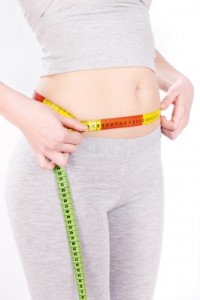 The waist-to-height ratio is used to measure body fat distribution. A higher ratio is related to increased risk of heart disease due to abdominal obesity.
Waist-to-height ratio and BMI are both popular screening tools for health risks connected to obesity. These methods are quick and cost efficient to use.
Researchers presenting a study with more than 2900 individuals at the 2015 European Congress on Obesity determined waist-to-height ratio measurements to be more accurate and more efficient for identifying heart disease risk when compared to using BMI alone.
When using BMI measurements, 41% of men and 29% of women in the study were classified as “normal”, but had waist-to-height ratios above normal. Researchers determine this would equal 12% of the population being misclassified as normal if only BMI measurements were utilized to assess risk.
Heart HealthYour Zip Code May Lead to Weight Gain
 Individuals who move to poorer neighborhoods tend to gain weight. This statement is based off a study published in the American Journal of Preventive Medicine.
Their have not been very many studies reviewing data from the same individuals over a period of time to evaluate the connection between environment and obesity, which is why researchers for this latest study wanted to examine the long term impact of moving to a poorer neighborhood on weight gain in connection to cardiovascular risk.
A group of 3000 Dallas County, TX residents with ages ranging between 18-65 years-old were followed for 7 years. Data was collected at the start of the study and at a 7-year follow-up. The data collected included self-reported medical histories, demographics, self-reported physical activity, and height, weight, and waist circumference measurements.
Continue reading