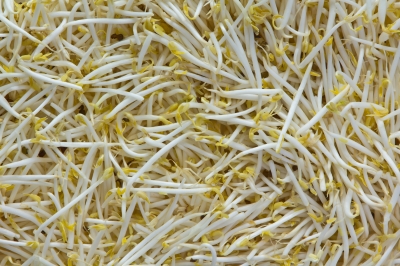
 Not only do shoots and sprouts add flavor and texture to meals, they also contribute needed nutrients. Bean sprouts are typically more calorie dense than seed sprouts, but they also contribute more protein.
Research into the health benefits of shoots and sprouts is limited. However, recent studies are examining the anticarcinogenic and antioxidant powers of sulforaphane, a compound in sprouts. There is up to 100 times more sulforaphane in broccoli sprouts than mature broccoli.
Animal studies have seen sulforaphane inhibit breast cancer steam cell and prostate tumor growth, while decreasing oxidative damage.
A small study found bamboo shoots to lower cholesterol and LDL cholesterol levels.
Buying sprouts and shoots
Popular sprouts include mung beans, wheat, radish, broccoli, and alfalfa.
Popular shoots include pea vines and bamboo.
You will generally find a large selection of shoots and sprouts at your local farmers market and Asian stores.
Select shoots and sprouts that are plump and crisp. Avoid stringy, discolored, slimy, or limp shoots and sprouts.
Continue reading →
 Heart failure affects about 5.7 million Americans.
 The 2015-2020 Dietary Guidelines for Americans recommends a reduced intake of added sugars to less than 10% of total daily calories. If you consume a 2000 calorie diet, this is equal to less than 12.5 teaspoons of added sugar. The average American consumes 19.5 teaspoons of daily.
 Multivitamins are marketed as a form of insurance to ‘bridge the gap’ between what you consume and what you need to ensure your needs are met. There’s much debate on whether or not multivitamins are truly beneficial and the potential for them to cause more harm than good.
 Questions surrounding the consumption of red meat and its contribution to heart disease has led to varied research. A main source of the nutrient choline is red meat and carnitine is derived of amino acids which are protein building-blocks. Red meat is a rich source of protein. Hence this exploration into whether or not we have another reason to reduce red meat consumption.
 High cholesterol levels increase heart disease risk. There are dietary and lifestyle changes you can make to lower cholesterol levels.