
 Do you go to your doctor’s appointment with a checklist? Creating a checklist is an easy way to go prepared and ensure you go home with what you need to know.
A small study was conducted on patients admitted to the hospital for heart problems. Half the patients went through a 27 steps checklist prior to discharge, while the other half received standard discharge instructions.
So in this study, this was a checklist DOCTORS used to ensure they covered everything prior to discharging a patient. The checklist served as a reminder to doctors and prompts them to be sure and cover things like medication recommendations, diet instructions, warning signs to watch for, referrals to other health professionals if applicable, and so on.
The study found those who were discharged using the checklist were more likely to take their medications as prescribed. For patients discharged with doctors utilizing the 27 step checklist, only 2% were readmitted to the hospital within one month. For the other patients that were discharged without the checklist, 20% found themselves readmitted to the hospital within a month.
Continue reading
 There are some very interesting questions coming out regarding the benefits of HDL cholesterol.
High HDL cholesterol has always been encouraged because people with higher HDL cholesterol levels have a reduced risk for heart disease. If you have low HDL cholesterol levels it’s likely that your doctor recommended you to boost levels through diet and exercise or by taking niacin supplements. This is due to the long held belief that HDL cholesterol reduces heart disease risk by “picking up” artery clogging cholesterol from circulation.
A new study utilizing modern genetic testing is challenging this theory, finding that there may not be a direct cause-and-effect relationship between reduced heart disease risk and high HDL cholesterol levels. Study findings indicate the high HDL levels themselves may not be protective on their own. These high HDL levels may be an indicator of something else reducing heart disease risk.
Continue reading
 Typically cranberry juice is thought of as a home health remedy to treat urinary tract infections (UTI’s). Some recent research indicates cranberry juice may also promote lower blood pressure levels.
Let me begin by stating these study results are preliminary. More research needs to be conducted. The study, funded by Ocean Spray Cranberries, was published as an abstract and the results have not yet been peer-reviewed and published in a journal. Results were reported at a meeting of the American Heart Association in Washington, DC.
Placebo Controlled Study
Continue reading

A lack of sleep can directly impact your weight and overall health.
Studies have shown a lack of sleep promotes the expression of a gene linked to obesity. Both sleeping too little (less than 5-6 hours per night) and too much (greater than 9-10 hours per night) are associated with weight gain.
Researchers also propose a lack of sleep can lead to a vicious cycle, meaning poor sleep equals weight gain equals conditions that interfere with sleep which equals continued sleep deprivation.
Appetite
Sleep quality and quantity impact the appetite regulation hormone ghrelin. Ghrelin levels decrease after a meal and increase between meals.
Leptin is another hormone that reduces feelings of hunger. Leptin levels increase during the day and peak at night.
Adipose tissue secretes leptin while the stomach secretes ghrelin.
Sleep deprivation has been shown to increase the ratio of ghrelin to leptin leading to increased appetite and specifically increased carbohydrate cravings. Many studies have shown a lack of sleep leads to increased caloric intake throughout the day.
Breathing Disorders
Continue reading According to the Centers for Disease Control (CDC), one in every three adults in the United States have hypertension (high blood pressure), but only about 50% of those with hypertension have it under control.
A study published April 2012 in the American Journal of Clinical Nutrition found folic acid intake to impact the development of hypertension.
Study participants included 4400 individuals between the ages of 18 – 30 years-old without high blood pressure. Over the following twenty years participant blood pressure was evaluated six times. Participants also completed three dietary history questionnaires. One questionnaire was completed at the start of the study, a second during the study, and the third and final dietary questionnaire at the study conclusion (20 years).
During the 20 year period, 989 individuals developed hypertension. Individuals consuming diets with the highest folate levels were 52% less likely to develop high blood pressure compared to those with the lowest folic acid intake.
Serum folate measurements during the study confirmed the correlation between folic acid and high blood pressure development.
Some food sources of folate include:
Phytosterols (plant sterols) are similar in structure to cholesterol. Consuming phytosterols as part of your diet can decrease total cholesterol because molecularly they are very similar to cholesterol. As you digest phytosterols they can prevent cholesterol from being absorbed into the bloodstream and therefore the cholesterol that is not absorbed is removed from the system as waste.
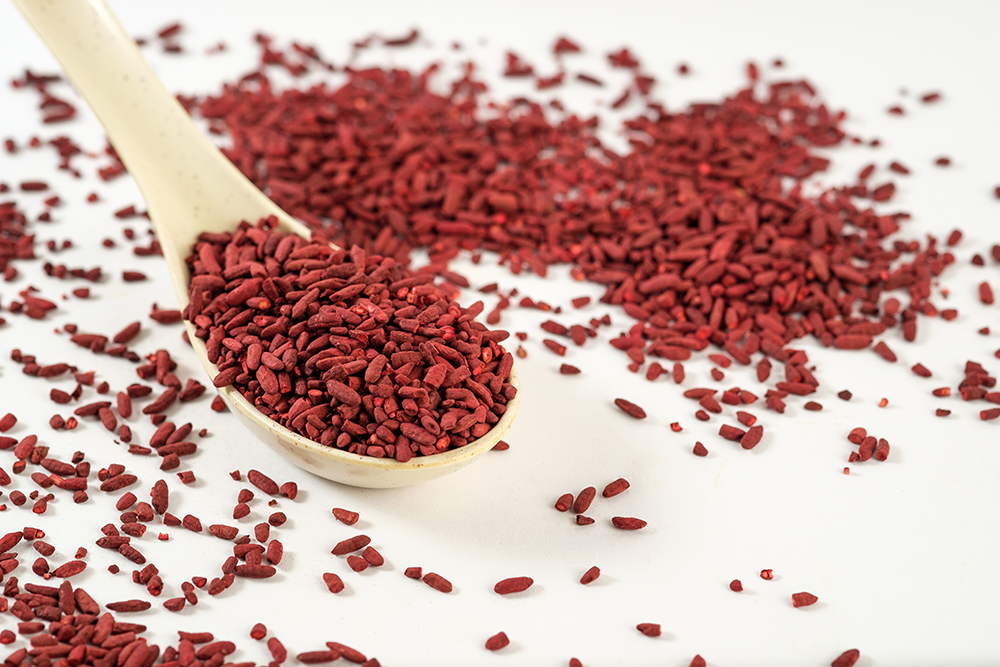
Red yeast rice is a fermented product where red yeast has grown on rice. It acts as a natural statin drug in that it forms monacolins (HMG-CoA reductase inhibitors) that lower cholesterol levels. Red yeast rice contains isoflavones, sterols, and monounsaturated fats that also promote lower cholesterol levels.
A study published April 2012 in the Journal of Dietary Supplements studied 18 individuals with high cholesterol. Daily for six weeks the 18 participants received a combination of phytosterols and red yeast rice.
Study results found the supplement combination decreased total cholesterol 19% and LDL Cholesterol 33%. No changes were seen in triglycerides, HDL cholesterol, blood pressure, BMI, or liver function.
For comparison, a 1999 study published in the Journal of the American Medical Association found statins to reduce LDL Cholesterol 28%.
Granted, this wasn’t a large study, but it does show there is likely a way to achieve the results of statins (or even better results) without needing the medication and the potential side effects.
Explore all your options with your doctor.
Keep in mind that even though red yeast rice is naturally occurring, it can deplete coenzyme Q10 levels just like statin drugs. Coenyzme Q10 plays a key role within every cell for energy production. Some coenzyme Q10 deficiency symptoms include aches/pains, fatigue, sore muscles, weakness, and shortness of breath. Be sure to supplement coenzyme Q10 if taking red yeast rice or statin medications.
Access the free course How to Lower Cholesterol in 8 Simple Steps at http://lowercholesterolwithlisa.com.
 |
Heart Health Made Easy: Master the Basics to Lower Blood Pressure and Cholesterol for a Longer, Healthier Life
|