
 This is a guest post provided by Jessica Kane. Kane is a professional blogger who is trying to be healthier this year. She currently writes for AEDs Today, a leading supplier of automatic external defibrillators.
Smartphones make it easier than ever to reach your personal fitness goals. However, with the abundance of health apps on the market, it can be difficult to wade through the clutter to find the right ones for you. Here are five apps worth your consideration whether you’re an avid exerciser or just a casual calorie burner looking to get started on the path to a healthier life.
1. Zombies, Run! 3 ($3.99, iOS & Android)
Want to turn your workout into a video game? With Zombies, Run! 3, you can do just that. It doesn’t matter if you run outdoors or on a treadmill, this app will have you thinking you’re actually running from hordes of zombies as you complete missions and collect supplies. Best of all, the game will work for you no matter what speed you choose to run. You’ll do more than lose fat. You’ll become the hero of your own action story.
2. C25K (Free, iOS & Android)
C25K takes a more traditional training approach for those new to running. Based on the wildly popular Couch-to-5K Running Plan, this app will slowly build your endurance through a combination of walking and running. By the end of the program, you’ll be able to complete the entire distance of a 5K race (3.1 miles). This app is also backed by a community of dedicated users who support one another through the entire process.
3. Figwee Portion Explorer ($1.99, iOS)
Dieting can be difficult when you’re always on the go. If you’re unable to count calories, it’s easy to become discouraged and fall off the bandwagon. With Figwee Portion Explorer, that won’t be a problem for you any longer. With this app, you’ll be able to estimate the nutritional content of your meal by comparing it to pictures on your screen. The user interface is also very clean and easy to use.
4. Gym Goal 2 ($5.99, iOS)
Although Gym Goal 2 is the most expensive app on this list, it’s the one you’ll want if you’re serious about strength training. Choose from one of the training programs already included with the app or build one to meet your specifications. There are countless ways to customize this app to make it your own. You can also use the app to track your body measurements, like body mass index, body fat and weight.
5. Lose It!(Free, iOS & Android)
Lose It! is the most simple, straightforward calorie counting app on the market. Set a goal, record your meals and lose weight in a manageable and sustainable way. This app also syncs with popular devices, like FitBit activity trackers, to make reaching your ideal weight even easier. You’ll also have access to a large online community of users where you can join challenges, get the support you need and have fun as you work toward a healthier you.
 The Dietary Guidelines for Americans are updated every five years by the Department of Agriculture (USDA) and the Department of Health and Human Services (HHS). The first edition was released in 1980 with the 7th edition released in 2010 (Dietary Guidelines for Americans). This means the 8th edition will be released this year.
There is a Dietary Guidelines Advisory Committee (DGAC) consisting of recognized experts in nutrition and public health. This committee reviews the latest research and provides the USDA and HHS Secretaries with evidence-based recommendations.
On February 19, 2015, the DGAC released its recommendations — the Advisory Report.
In the report, the DGAC stated cholesterol is not a nutrient of concern for over consumption.
This would mean eliminating the 2010 guideline recommending cholesterol intake be limited to 300 mg per day or less. The average American cholesterol intake is 340 mg daily.
This recommendation is consistent with new guidelines from the American Heart Association and American College of Cardiology, but has still caused significant debate on the impact if dietary cholesterol guidelines are removed.
What are some concerns being debated?
Continue reading
 Could weight loss be about more than the foods you choose to eat? What if you could lose weight by simply changing your meal time?
This is not a new idea. However, is it just a gimmick or actually supported by research. Well, I found three different studies regarding meal timing.
Study #1: Timing of food intake predicts weight loss effectiveness
This study was published in the International Journal of Obesity in 2013. The goal was to determine the relationship between meal timing and weight.
The study had 420 individuals divided into two groups – early eaters and late eaters. Early eaters were defined as eating lunch before 3pm. Late eaters defined as eating lunch after 3pm.
Both groups followed a 20-week weight loss treatment.
Study results show late eaters lost less weight and had a slower rate of weight loss compared to early eaters. The late eaters also skipped breakfast more frequently than early eaters.
The surprising piece is that energy intake, dietary composition, estimated energy expenditure, appetite hormones, and sleep were similar between the two groups.
Conclusion: Eating late may influence weight loss success.
Continue reading
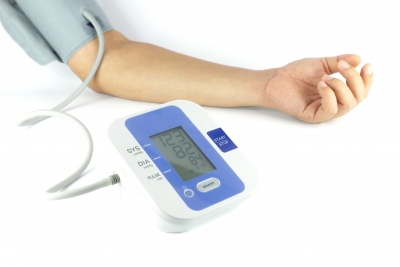 Here are 7 ways to lower your blood pressure without medication.
1. Use a home blood pressure monitor
Monitor your blood pressure at home, as well as your doctor’s office. Combining your readings with your doctor’s will give a better measure of your high blood pressure and treatment to control it. Home monitoring will also rule out if you suffer from “white coat hypertension”. It is ideal to monitor your blood pressure at the same time every day.
Continue reading
Dr. Bowden is a board-certified nutritionist and author of 14 books including The Great Cholesterol Myth co-authored with cardiologist Stephen Sinatra.
I was interested to know if Dr. Bowden supported diets unlimited in saturated fat. Dr. Bowden provided key clarification when answering…
The problem isn’t with the saturation of fat, but with its toxicity.
If you consume fat from feedlot raised animals, they have received hormones, antibodies, steroids and pesticides. All of this is stored in their fat. Fat you then consume. This is not a healthy fat and in no way recommended.
Let’s look at this from another angle to ensure you understand the point Dr. Bowden is making.
Inflammation promotes degenerative diseases — Alzheimer’s, heart disease, diabetes, cancer, multiple sclerosis, etc. Inflammation is tied to the relationship between omega 3 and omega 6 fatty acids. Omega 6 is inflammatory. Omega 3 is anti-inflammatory. You need both in your diet. You cannot simply eliminate all omega 6 fatty acids. You need an appropriate balance between omega 3 and omega 6. The current ratio, according to published research in the World Review of Nutrition and Dietetics, Vol 100, is 16:1 for most Americans. The desired, healthy ratio is between 1:1 and 4:1.
Accordingly to Dr. Bowden, this poor balance is due to the removal of saturated fats from our diets. Saturated fat is a neutral. It’s neither inflammatory, nor anti-inflammatory….as long as it is not toxic. A very small percent of the US population consumes grass-fed beef free of toxins. If you consume the standard feedlot raised beef, then no longer restricting your intake is not wise. Yes, the saturated fat itself isn’t going to lead to heart disease, but the toxins contained in that saturated fat are a big negative for your health.
So, what are some foods containing saturated fat that Dr. Bowden considers okay to eat?
Continue reading
I discussed heart disease in connection to saturated fat with board-certified nutrition Dr. Jonny Bowden.
Dr. Bowden is the author of 14 books including The Great Cholesterol Myth co-authored with cardiologist Stephen Sinatra. He explains that “I’m out to rehabilitate the reputation of saturated fat, a perfectly healthy fat that we collectively demonized when we wrongly believed it lead to heart disease. Recent research has shown that there’s no connection between saturated fat in the diet and the incidence of heart disease. Instead of saturated fat and cholesterol, most leading edge experts are now looking at inflammation as a prime mover in the development of heart disease.”
Today I want to cover what Dr. Bowden shared on the history of saturated fat and it’s believed connection to heart disease.
Why is there so much news lately in regards to saturated fat and its connection, or lack of connection, to heart disease? Accordingly to Dr. Bowden, the media is finally catching up with what we’ve known for 15 years. Nothing has changed. It’s just becoming more difficult to ignore the mounting evidence. It never caused heart disease.
Continue reading