
New US Food Pyramid 2026: What Changed in the Updated Dietary Guidelines?
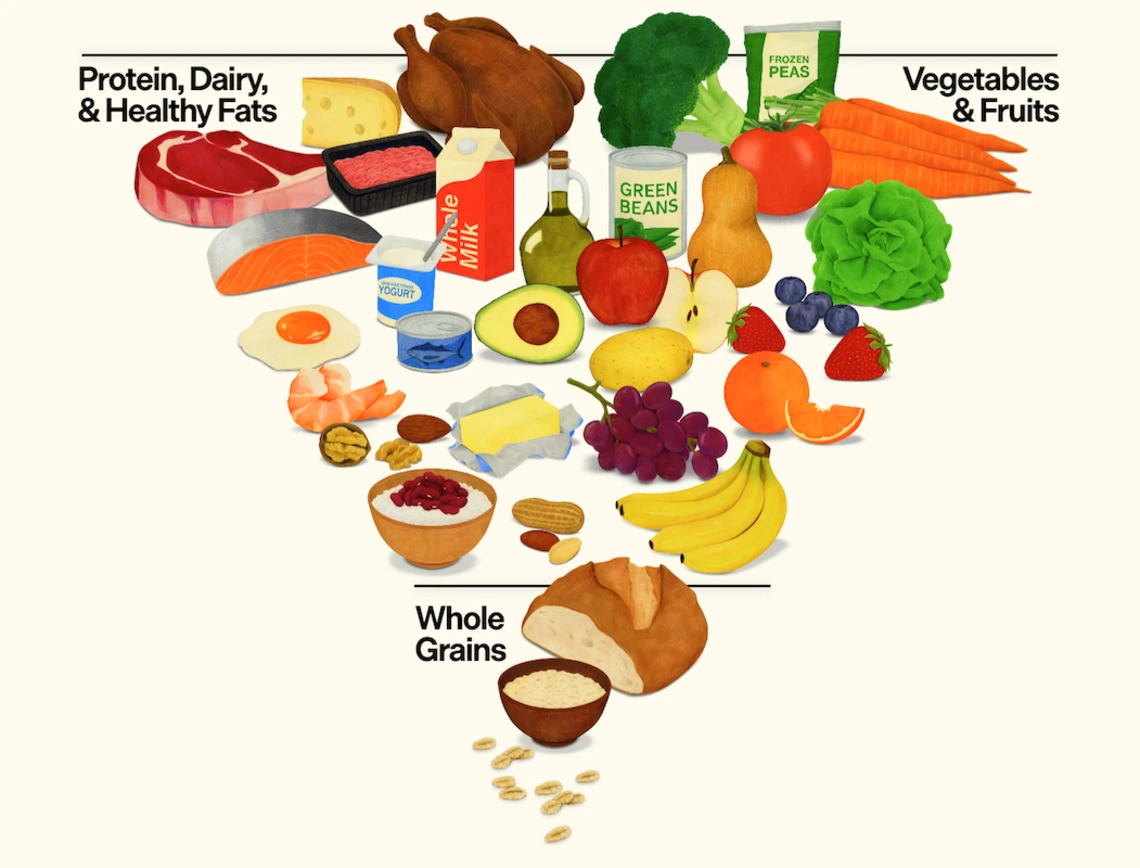
Nutrition guidance in the United States has evolved over the decades, from the original food pyramid to MyPlate and now back to a redesigned pyramid. The new US food pyramid 2026, introduced alongside the updated Dietary Guidelines for Americans, reflects a noticeable shift in how we’re encouraged to think about food and long-term health.
So what changed — and what does it mean for your plate?
What Is the New US Food Pyramid 2026?
The new visual reintroduces the pyramid shape but flips the emphasis seen in earlier versions. Instead of placing grains at the foundation, the updated model prioritizes protein, healthy fats, and nutrient-dense whole foods as central components of a healthy eating pattern.
The goal of the updated dietary guidelines for Americans is to better reflect current research on metabolic health, blood sugar regulation, and chronic disease prevention. While it’s still a general framework, not a one-size-fits-all prescription, it signals a shift toward higher-quality food choices and greater awareness of how macronutrients affect overall health.
Continue readingHow to Use Jesse Itzler’s Misogi to Reach Your Health Goals

Over the past few years, I’ve become increasingly familiar with Jesse Itzler’s work and the way he thinks about challenge, growth, and living life with intention. Many of you know that in 2023 I completed the 29029 Everesting event, and in 2024 I took on the 29029 Trail endurance event. Both were created by a company Jesse co-founded. Learning about the Jesse Itzler Misogi method has been especially inspiring for how to approach big health goals with intention and structure.
What I’ve learned through those experiences is that big, meaningful change never happens by accident. It happens through structure, intention, and stretching yourself. And that’s exactly what Jesse teaches.
I’ve been reflecting on Jesse’s yearly planning philosophy, including his Misogi, Kevin’s Rule, and his simple three-part annual plan, and I want to show you how to apply it to your own health goals so that six months from now, you can look back and say, “I actually did it.”
Jesse Itzler’s Three Key Concepts: Applied to Your Health
1. The Misogi: One Big, Hard, Stretch Goal
The Jesse Itzler Misogi is described as a once-a-year challenge that’s so difficult it has a 50% chance of failure. It’s designed to stretch your limits and transform your belief in what you can do.
For health goals, your Misogi does not need to be an ultra, a mountain, or anything extreme. It simply needs to push you outside your comfort zone, far enough that the process forces growth.
Examples of a Health-Focused Misogi
- Completing a 5K, 10K, or half marathon when you’ve never been a runner.
- Hitting 10,000 steps every single day for a full month.
- Following a 6-week strength plan without missing a workout.
- Eating heart-healthy for 30 days with no exceptions.
- Overcoming a fear, like joining a gym, trying a group class, or hiring a trainer.
- Completing a 12-week walking program and doubling your weekly mileage.
- Signing up for a local charity hike or cycling event and fully training for it.
A Misogi should make you think:
“I’m not sure I can do this… but I think I want to try.”
Because here’s the truth:
When you train yourself to do something hard on purpose, everything else in your life feels easier.
2. Kevin’s Rule: Schedule a mini-adventure every 8 weeks
Kevin’s Rule is named after Jesse’s friend Kevin who always says yes to new experiences. The concept is refreshingly simple:
Every 8 weeks, schedule a planned mini-adventure that breaks your routine.
This is powerful for heart health because positive experiences and novelty are directly linked to:
- Improved cardiovascular outcomes
- Reduced blood pressure
- Better stress hormone regulation
- Greater motivation to stay consistent with healthy habits
Mini-adventures create internal momentum. They reset your nervous system. They help you feel alive again which matters deeply when stress, monotony, or burnout are part of your health story.
Mini-Adventure Ideas for Heart Health
- Join a pickleball league (moderate cardio + fun + community).
- Try a Mediterranean cooking class.
- Explore a new hiking trail – easy, moderate, or challenging.
- Take a pottery, dance, drumming, or art class to decompress.
- Try a new fitness class you’ve been curious about.
- Visit an indoor track or museum on a cold day and walk laps.
- Spend a Saturday morning entirely phone-free.
- Try contrast therapy (sauna + cold plunge).
- Go biking somewhere scenic and new.
- Take a weekend “wellness field trip” – yoga, meditation, walking, quiet.
These micro-adventures reduce stress naturally and chronic stress is one of the biggest contributors to cardiovascular disease.
And they work seamlessly with my “plan for obstacles” step (keep reading) since mini-adventures help you reconnect with your motivation when life starts feeling monotonous or heavy.
Continue readingPersimmon Health Benefits: A Sweet Boost for Your Health

If you’re looking for a naturally sweet, nutrient-packed fruit to add to your diet, persimmons are worth exploring. Beyond their vibrant color and honey-like flavor, persimmons provide multiple health benefits that support digestion, heart health, and overall wellness.
1. Rich in Vitamins and Antioxidants
Persimmons are packed with vitamins A and C, which are essential for immune function, skin health, and vision. They also contain antioxidants like beta-carotene and flavonoids, helping to reduce inflammation and protect your body from oxidative stress. Incorporating persimmons regularly is one of the easiest ways to enjoy persimmon health benefits naturally.
2. Supports Digestive Health
High in dietary fiber, persimmons promote healthy digestion and regularity. Fiber also feeds beneficial gut bacteria, contributing to a balanced microbiome, which is vital for immune support and overall gut health. Enjoy persimmons fresh, in oatmeal, or as part of a salad to increase your fiber intake.
3. Heart Health Benefits
Persimmons contain potassium and heart-healthy flavonoids. Potassium helps maintain healthy blood pressure, while flavonoids reduce oxidative stress and inflammation in the cardiovascular system. Including persimmons in your diet may help support healthy cholesterol levels and overall heart function.
4. Natural Energy Boost
With natural sugars and complex carbohydrates, persimmons provide sustained energy. They make an ideal snack for a mid-morning or afternoon boost, offering a healthy alternative to processed sweets. Adding persimmons to your daily routine is another way to take advantage of persimmon health benefits while enjoying a naturally sweet treat.
5. Versatile and Delicious
Persimmons can be enjoyed fresh, dried, or cooked. Slice them into salads, blend into smoothies, or roast them for a naturally sweet treat. They pair well with nuts, yogurt, or spices like cinnamon and ginger.
Bottom Line
Persimmons are a delicious, nutrient-rich fruit offering a wide range of health benefits. From supporting digestion and heart health to boosting immunity and energy, adding persimmons to your diet is an easy, flavorful way to nourish your body and enhance overall wellness.
Boosting Immunity: Six Evidence-Backed Strategies for a Stronger Defense

Your immune system works around the clock to protect your body from viruses, bacteria, and environmental stressors. While genetics and age influence immune health, daily habits play a major role in how to strengthen immunity naturally and keep your body defending itself effectively.
Recent studies highlight several effective ways to strengthen immunity naturally through nutrition, movement, sleep, and stress balance.
1. Eat a Balanced, Nutrient-Dense Diet
A diet rich in whole foods supports a diverse gut microbiome which is a key regulator of immune function. A 2024 review in the British Journal of Nutrition found that diets emphasizing vegetables, fruits, legumes, and omega-3 fats improved immune resilience and reduced inflammation markers.
Aim for a variety of colorful produce, lean proteins, and healthy fats. Vitamin C, zinc, and selenium are particularly important for white blood cell activity and antioxidant defense.
2. Support Your Gut Health
About 70% of your immune cells reside in the gut. Maintaining balance in the gut microbiota helps your body recognize harmful pathogens and prevent chronic inflammation.
Continue readingThe Surprising Role of Oral Health in Heart Disease

When you think about heart health, your first thoughts might be about cholesterol, blood pressure, or exercise. These are the big players everyone talks about—and they’re important. But did you know that your gums and teeth can also play a role in your heart’s well-being? The oral health and heart disease connection is real, and understanding it can help you take better care of both your mouth and your heart.
What’s the Oral Health and Heart Disease Connection?
Gum disease, also known as periodontal disease, is a common condition where the gums become inflamed due to bacterial infections. If left untreated, it can lead to tooth loss and other serious health issues. What many people don’t realize is that gum disease doesn’t just affect your mouth—it can have effects throughout your body.
Your mouth is full of both good and bad bacteria. When plaque builds up around your teeth, harmful bacteria can thrive, causing inflammation in your gums. This inflammation isn’t just local; these bacteria and the chemicals they produce can enter your bloodstream through tiny openings in your inflamed gums.
Once in your bloodstream, these bacteria and inflammatory molecules can travel to your arteries, the blood vessels that carry oxygen-rich blood to your heart and other organs. This can trigger inflammation in the arteries themselves, which contributes to the buildup of plaque—a sticky substance made of fat, cholesterol, calcium, and other debris—in a process called atherosclerosis (Harvard Health Publishing).
Atherosclerosis narrows and stiffens your arteries, making it harder for blood to flow freely. Over time, this can lead to serious cardiovascular problems, including heart attacks and strokes.
What Does the Research Say about the Oral Health and Heart Disease Connection?
A 2020 consensus report in the Journal of Clinical Periodontology reviews how periodontal inflammation may accelerate atherosclerosis—the buildup of plaque in arteries—and increase heart disease risk (Journal of Clinical Periodontology, 2020).
Continue readingTriglycerides: What They Are & Proven Ways to Lower Triglycerides Naturally

Triglycerides are a type of fat found in the blood. After you eat, your body converts any calories it doesn’t need to use right away into triglycerides, storing them in fat cells. Later, hormones release these triglycerides for energy.
While triglycerides are essential for overall health, high levels can increase the risk of heart disease and may signal metabolic syndrome. This condition includes a combination of risk factors such as high blood pressure, high blood sugar, excess belly fat, and abnormal cholesterol levels.
How to Lower Triglycerides
Keeping triglyceride levels in check is essential for heart health. Recent studies highlight several effective strategies:
Continue reading