

The development of heart disease is associated with many risk factors. LDL cholesterol level is often used to determine if preventative treatment is needed, such as medication to lower levels in an effort to prevent heart disease.
However, research indicates LDL cholesterol alone is not necessarily a good determinant of risk. LDL particles vary in their content, size, and density. Not all LDL particles impact heart disease risk in the same way.
LDL particles come in two main sizes: Large, fluffy particles and small, dense particles.
I had these particles explained to me once by picturing dump trucks on a highway. This helped me visualize the role of these different particles. Hopefully it’ll help you…
Picture the large, fluffy particles to be five large trucks transporting a full load on the highway. Now picture small, dense particles to equal twenty small, trucks with a full load on the highway. It takes twenty small trucks to carry the same load five large trucks can transport.
The more “trucks” (ie particles) in your system, the greater your heart disease risk.
Hence the reason it is beneficial to have large, fluffy particles (ie trucks that can carry a lot in fewer loads) versus small, dense particles (ie more trucks to carry the same load).

Exercise is beneficial for everyone, even those who have heart disease or have had a heart attack. Regular exercise can strengthen your heart and promote quicker recovery.
Safe Exercise for Heart Disease
However, there are warning signs to watch for.
Stop exercise if you become short of breath or overly fatigued. Granted, exercise will cause you to breathe harder and you should feel like you have exerted yourself after a solid workout. Discuss what is acceptable for you with your doctor.
If you deal with shortness of breath regularly, even when not exercising, contact your doctor. You may need to adjust your diet, fluid intake, or medications.
If you develop heart palpitations or an irregular heartbeat, stop exercising, rest for 15 minutes and then take your pulse. If you heart rate remains greater than 120 beats per minutes, contact your doctor.
Don’t ignore pain. Ignoring pain can lead to injury.
When to stop exercising
Continue reading
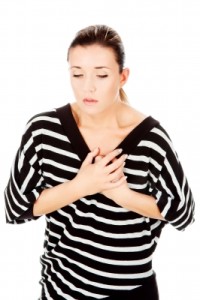
A sudden and sometimes fatal occurrence of coronary thrombosis, typically resulting in the death of part of a heart muscle. ~ Oxford dictionary
The heart muscle requires oxygen to survive. When oxygenated blood flow to the heart muscle is cut off or severely reduced a heart attack occurs. Blood flow can be cut off or severely reduced by the build-up of arterial plaque. This build up eventually causes arteries to narrow and potentially close completely. This is a slow process known as atherosclerosis.
As plaque builds up it can eventually rupture or break open inside the artery, causing a blood clot to form. If the blood clot becomes large enough, it can reduce or completely block the flow of oxygen rich blood to the heart muscle.
Ischemia is when the heart becomes deprived of needed oxygen and nutrients. If blood flow to the heart is not quickly restored, ischemia will damage or cause the death of part of the heart muscle. This is a heart attack and the healthy heart muscle tissue becomes replaced with scar tissue.
Continue reading
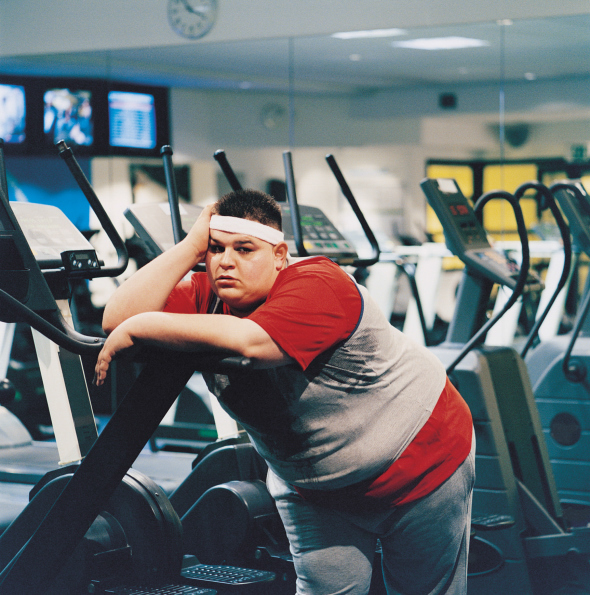
Short bursts of high intensity interval training may provide a more realistic alternative for preventing and managing Type 2 diabetes, as well as promoting weight loss, according to a paper published in Obesity Reviews.
This was a meta-analysis, meaning researchers searched databases to review multiple studies examining the effects of high-intensity interval training (HIIT) on specific health parameters. In this case, 50 studies were included in the research, paying particular attention to insulin resistance, blood glucose, hemoglobin A1c, body weight, and cardiorespiratory fitness.
Researchers found short bursts of vigorous activity in quick succession to be more “effective” when compared to longer forms of exercise in regards to how the body uses and stores blood sugar.
A majority of individuals diagnosed with type 2 diabetes are also classified as overweight or obese. Type 2 diabetes impacts your entire body: vision, kidneys, heart, etc. If you have high triglycerides, this is an indicator for greater risk for developing type 2 diabetes.
Treatment plans for type II diabetes, high triglycerides, and weight management included diet and physical activity.
The effects of exercise on the body’s insulin sensitivity and ability to utilize blood sugar are well proven. The effects of exercise on weight management is debatable.
Continue reading
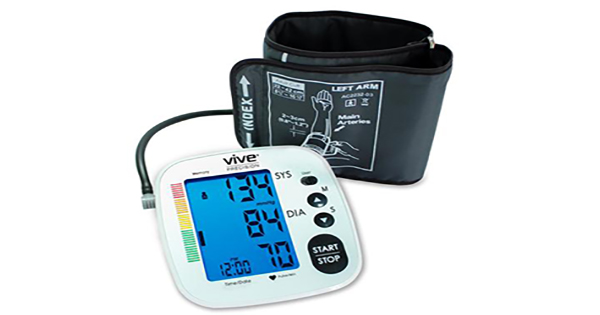 Monitoring blood pressure at home is one step you can take to supplement clinic monitoring for a more complete representation of your typical blood pressure throughout the day.
There are a wide variety of blood pressure monitors available. The American Heart Association, American Society of Hypertension, and Preventive Cardiovascular Nurses Association all recommend upper arm devices for greater accuracy. Avoid wrist and finger monitors.
When purchasing a home blood pressure monitor, it’s important you consult with your doctor or medical supply company to ensure you select an appropriate cuff size.
ViveHealth.com gifted me with a Vive Precision Blood Pressure Monitor along with compensation to review this device. That being said, all opinions in this review are my own.
The Vive blood pressure monitor comes with a large, easy to read display and is battery or AC power compatible. The product I received came packaged with the four AAA batteries needed. It did NOT come with the AC adapter. Looks like it requires a standard DC V6 adapter. I do like battery operated… one less cord to wrangle and the device notifies you if the battery power is getting low.
 High blood pressure is diagnosed when blood pressure is consistently equal to or greater than 140 mm Hg/90 mm Hg.
According to the Centers for Disease Control and Prevention about 70 million adults are diagnosed with high blood pressure. This is equal to about 1 out of every 3 adults in this United States.
Blood pressure diagnosis is often based on clinic blood pressure readings. This is problematic due to a variety of factors resulting in inaccurate readings. Some factors that impact blood pressure accuracy include adequate rest period prior to blood pressure measurement, cuff size appropriate for arm circumference, and cuff deflation rate. Additional challenges to the clinic settings is whether or not the reading reflects the normal blood pressure level when outside the clinic setting. Many suffer from what is termed “white coat hypertension” where blood pressure rises in response to the medical environment.
Monitoring blood pressure at home is one step you can take to supplement clinic monitoring for a more complete representation of typical blood pressure levels.
A Joint Scientific Statement from the American Heart Association (AHA), American Society of Hypertension (ASH), and Preventive Cardiovascular Nurses Association (PCNA) encourages increased regular use of self-monitoring blood pressure for the majority of patients with hypertension to increase patients’ engagement and ability to manage their blood pressure, as well as enable the care team to provide appropriate and timely treatment.
Take these steps to monitor blood pressure at home:
Continue reading